How Many Drinks Per Day Show Up in a Hair Alcohol Test?
A question we often hear is: “How much alcohol do I have to drink before it shows up on a hair test?”
The short answer is: hair alcohol testing can detect both occasional and heavy drinking patterns. Unlike a breath test, which only measures alcohol at a single moment, hair testing gives a long-term picture of alcohol use across several months.
How Hair Alcohol Testing Works
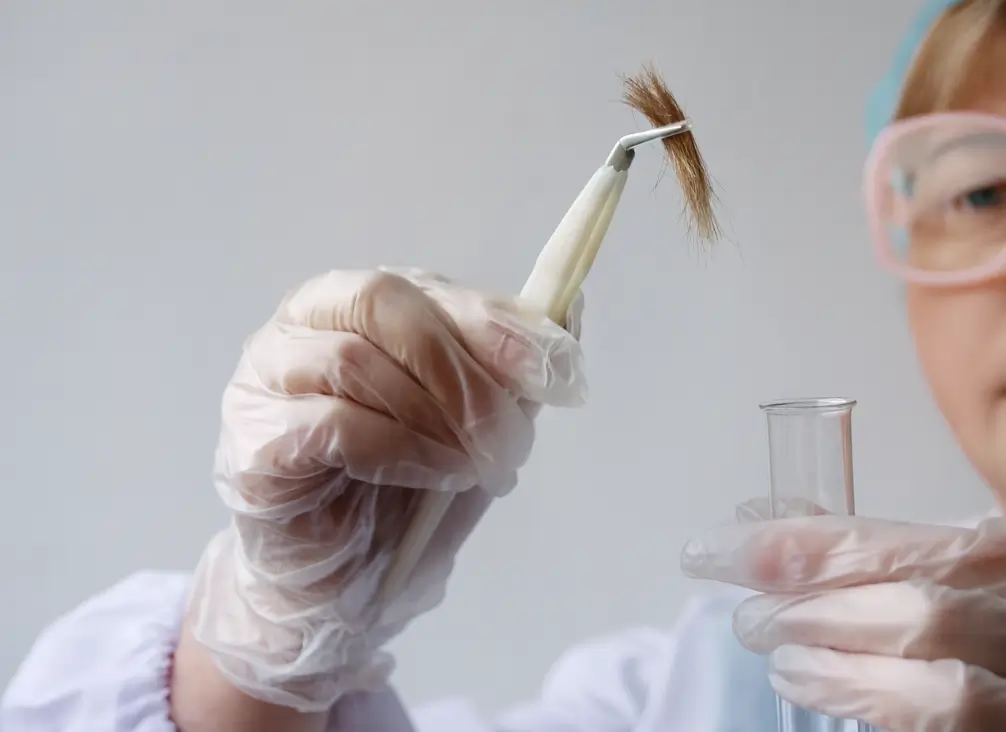
Hair testing does not measure alcohol itself. Instead, it looks for a biomarker called Ethyl Glucuronide (EtG), which forms in the body whenever alcohol is consumed.
As your hair grows, EtG is incorporated into the hair shaft. Since head hair grows at about 1 cm per month, a 3 cm hair sample can reflect approximately 90 days of alcohol use.
This makes hair alcohol testing particularly useful in legal, workplace, and family law settings, where evidence of drinking behaviour over time is needed.
The Society of Hair Testing (SoHT) provides internationally recognised guidelines for interpreting hair alcohol results. These guidelines are used worldwide by accredited laboratories and forensic experts.
EtG Level in Hair
Interpretation
What This Means
< 5 pg/mg
Abstinent or Very Irregular Alcohol Consumption
No significant alcohol use. Not inconsistent with abstinence. May reflect incidental or environmental exposure.
5–30 pg/mg
Regular Alcohol Consumption
Moderate alcohol use such as regular social drinking.
> 30 pg/mg
Chronic Excessive Consumption
Heavy or chronic alcohol use, indicative of frequent or sustained drinking.
Why You Won’t See “X Drinks Per Day” in Reports
Although people often want to know how many drinks equal these results, the test is not designed to measure exact daily intake. This is because:
Everyone metabolises alcohol differently.
Drinking patterns vary (daily drinking vs weekend binges).
Hair type, colour, and cosmetic treatments (bleaching, dyeing, straightening) can influence EtG levels.
Environmental exposure may produce very low-level positives.
For this reason, EtG results are described in terms of patterns of use, not “drinks per day.”