Curriculum vitae
Dr Michael Robertson, Ph.D. (Med)
Pharmacologist / Forensic Toxicologist / Chemist. More than 30 years of professional experience, providing independent expert reports and testimony in Australian courts.
- Independent of the laboratory
- Court-admissible reporting
- Chair, Standards Australia urine drug testing committee
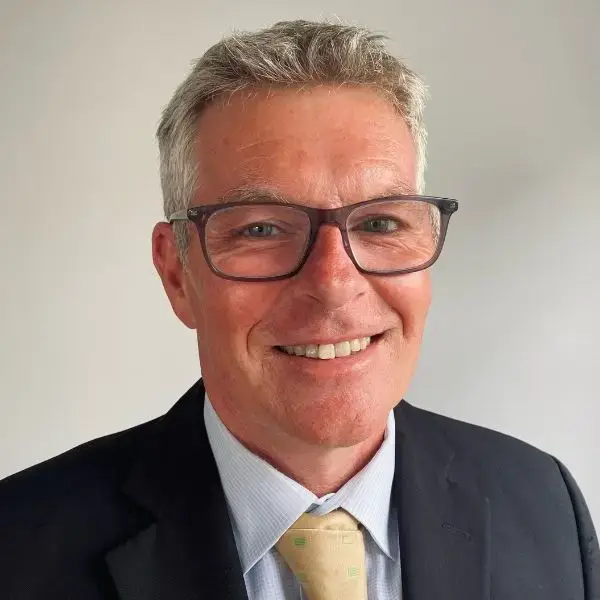
Dr Michael Robertson is a chemist, pharmacologist and forensic toxicologist with more than 30 years of professional experience, and a national authority on drug and alcohol testing. He has held senior roles in laboratory management and forensic toxicology in Australia and the United States, at the Victorian Institute of Forensic Medicine in Melbourne and the Office of the Medical Examiner in California.
As an independent expert and consultant he advises on the testing and interpretation of results from urine, oral fluid, blood and hair, and provides expert reports and testimony in Australian courts across criminal, family law, insurance, public liability and workplace matters.
He has authored more than a dozen peer-reviewed papers in international journals including Forensic Science International and Forensic Science, Medicine and Pathology, is an invited reviewer for both, and presents regularly to conferences, universities, law firms, law societies, police, prosecutors and plaintiff and defence lawyers.
Medico-legal matters he reports on
- Criminal law
- Drug-facilitated sexual assault; DUI and DUID; cause or contribution to death; human performance and behaviour; poisonings; drug importation, possession, supply and manufacturing; and the legal status of drugs including synthetic cannabis, synthetic stimulants and analogue provisions.
- Family law
- Interpretation of urine and hair testing results, Liver Function Tests (LFT), Carbohydrate Deficient Transferrin (CDT) and Ethyl Glucuronide (EtG) testing.
- Personal injury and insurance
- Medical negligence, CTP and insurance claims.
- Doping disputes and investigations
- Professional athletes (ASADA, WADA) and Steward enquiries in the racing industry, jockeys, riders, racehorses, harness racing and greyhounds.
- Workplace accidents
- The cause and contribution of drugs and alcohol to an incident, together with exposure to chemicals and other poisons.
- Workplace disputes
- Interpretation of urine, oral fluid and hair results, and compliance with acceptable drug testing procedures, including AS/NZS 4308:2008 and AS/NZS 4760-2019, before courts of law and Fair Work Australia.
Qualifications
- Post-Doctoral Fellow, Forensic ToxicologyNational Medical Services Inc., Pennsylvania, USA
- Ph.D., Medicine (VIFM)Monash University, Melbourne, Australia
- B.Sc. (Hon), Pharmacology / ToxicologyMonash University, Melbourne, Australia
Scholarships and awards
- Postdoctoral Fellowship, National Medical Services Inc.
- Monash University Graduate Scholarship
Invited lectureships
- Forensic ToxicologyBox Hill Institute, Melbourne, Australia
- Pharmacology / Forensic ToxicologyCalifornia State University, Los Angeles, California, USA
- Forensic ToxicologyNational University, San Diego, California, USA
- ToxicologyThomas Jefferson University, Philadelphia, Pennsylvania, USA
Professional experience
2001 – present
Director and Senior Consultant
Independent Forensic Consulting Pty Ltd, Australia
- Provides independent advice and expert opinions in legal matters, and prepares expert reports and testifies throughout Australia and internationally.
- Evaluates and gives opinions on all aspects of drug testing and result interpretation; aspects of drug manufacture; the effects of drugs including alcohol on human performance in driving and workplace accidents; the role of drugs in deaths and significant injuries; and the investigation of human poisonings and chemical exposures.
- Has assigned, supervised, performed, certified and interpreted hundreds of chemical and toxicological analyses for pathology and forensic laboratories, drug testing organisations, law enforcement, private individuals, pharmaceutical companies, regulatory agencies and legal professionals.
- More than 15 years as an analyst and analytical chemist, both performing analyses and supervising and managing laboratories.
2011 – present
Consulting toxicologist to industry and national workplace drug testing organisations
Independent advisory practice, Australia
- Advises national drug testing companies and private, government and union organisations on the strengths and weaknesses of urine and oral fluid testing strategies.
- Interprets laboratory results for blood, oral fluid and urine drug findings, and evaluates or recommends testing regimes, policies and procedures for compliance with AS/NZS 4308:2008 and AS/NZS 4760-2019.
- Evaluates matters of forensic concern including disputed drug testing results, compliance with procedures and Australian Standards, and workplace disputes, with testimony in courts of law and Fair Work Australia.
- Provides expertise in drug, chemical and alcohol matters including assessment of impairment, drug-use patterns, and environmental and workplace exposure.
2011 – present
National advisor for workplace drug and alcohol testing programs
Standards Australia committee CH-039, Australia
- Current Chair of the Standards Australia committee reviewing and updating the testing of drugs in urine (AS/NZS 4308:2008).
- Immediate past Chair of the Standards Australia committee for the testing of drugs in oral fluid (AS/NZS 4760-2019).
- Advises on compliant alcohol and drug testing policies and procedures, facilitates policy development and negotiations, and provides education to private and public organisations on the strengths and weaknesses of different testing regimes.
2002 – 2010
Senior Scientist and Laboratory Manager
Hospira (Faulding), Australia
- Analytical and managerial functions including the testing and evaluation of liquid and solid dosage forms, raw materials and dispersions, purity, excipients and impurity profiles, by liquid chromatography (LC) and gas chromatography (GC), with and without mass spectrometry (MS) detection.
- Managed, led and supervised teams of scientists in the development, testing and reporting of results to internal and external stakeholders, clients and regulatory agencies.
2000
Forensic Toxicology Laboratory Manager and Chief Toxicologist
Office of the Medical Examiner, California, USA
- Managed all scientific, financial and personnel functions of the forensic toxicology laboratory.
- Assigned, supervised, performed and certified testing of biological specimens and exhibits for analytes of toxicological and investigational interest, especially in relation to matters of law, by LC, GC with and without MS, FID, NPD, TLC, UV and electrochemical detection, and immunoassay screening.
- Provided oral and written reports and expert opinions to pathologists, law enforcement and other parties on the validity and significance of analytical findings, and advised local and state government on forensic toxicology, drug policy and legislation.
1996 – 2000
Forensic Toxicologist, Senior Scientist and Director of Expert Services
National Medical Services, Inc., Pennsylvania, USA
- Assigned, supervised, performed and certified testing of biological specimens, blood, urine, hair, together with seized drugs, for analytes of scientific and investigational interest in matters of law.
- Analysis by LC, GC with and without MS, FID, NPD, atomic absorption, inductively coupled plasma, TLC, UV and electrochemical detection, and immunoassay screening.
- Managed and supervised teams of scientists, chemists and toxicologists, and provided oral and written results and expert opinions to courts of law throughout the USA.
1991 – 1996
Forensic Scientist
Victorian Institute of Forensic Medicine (VIFM), Melbourne, Australia
- Analysed biological and non-biological samples for drugs and chemicals, content, purity and impurity profiles, and performed research and development in drug testing methods.
- Performed research into the role of drugs and alcohol in motor vehicle crashes.
Appointments and committee service
- Chair, Standards Australia Urine Drug Testing Committee CH-0392019 – present
- Chair, Standards Australia Oral Fluids Committee CH-0392014 – 2019
- FACTA Committee for Hair TestingJune 2021 – present
- FACTA Technical Working Group, Oral Fluid TestingOctober 2014 – present
- TIAFT Committee for Therapeutic / Toxic Drug Levels2011 – present
- Scientific Reviewer, Forensic Science, Medicine and Pathology2014 – present
- Scientific Reviewer, Forensic Science International2003 – present
- Scientific Advisory Board, Society of Forensic Toxicologists Annual Meeting2000, 2003, 2006, 2011
- Drugs and Driving Committee, Society of Forensic Toxicologists2000 – 2004
- Drug Facilitated Sexual Assault Committee, Society of Forensic Toxicologists2000 – 2004
His interpretation and reporting follow the published standards and guidelines of SoHT, SOFT, FACTA, ANZFSS and TIAFT.
Publications and presentations
Edited lists. A full list of publications, abstracts and presentations can be provided on request. Call (03) 9380 5434.
Book chapters
- Robertson MD, Raymon L. Rohypnol and other benzodiazepines. In: Drug Facilitated Sexual Assault, A Forensic Handbook. LeBeau and Mozayani eds. Academic Press, NY. Chapter 4.
- Raymon L, Robertson MD. Hallucinogens. In: Drug Facilitated Sexual Assault, A Forensic Handbook. LeBeau and Mozayani eds. Academic Press, NY. Chapter 6.
Publications
19 listed, journal papers, bulletins and case reports
- Robertson MD and Staikos V. Segmental Analysis of Hair in an Alleged Drug-Facilitated Sexual Assault, The pros and cons of segmental analysis and why results are rarely black and white. TIAFT Bulletin, Vol. 41(3) pp. 18–20, 2011.
- Robertson MD. Medical Misadventure: Steroid Induced Toxicity and Associated Psychosis, A Case Study. ToxTalk, Vol. 31(3) p. 9, 2007.
- Drummer OH, Gerostamoulos J, Batziris H, Chu M, Caplehorn JR, Robertson MD, Swann P. The involvement of drugs in drivers of motor vehicles killed in Australian road traffic crashes. Accident Analysis and Prevention, Vol. 36(2) pp. 239–48, 2004.
- Drummer OH, Gerostamoulos J, Batziris H, Chu M, Caplehorn JR, Robertson MD, Swann P. The incidence of drugs in drivers killed in Australian road traffic crashes. Forensic Science International, Vol. 143(2-3) pp. 154–62, 2003.
- Robertson MD and Marinetti LJ. Carisoprodol, Effects on Human Performance and Behaviour. Forensic Science Review, Vol. 15(1) pp. 1–9, 2003.
- Robertson MD and McMullin MM. Olanzapine Concentrations in Clinical Serum and Postmortem Blood Specimens, When does Therapeutic become Toxic. Journal of Forensic Sciences, Vol. 45(2) pp. 418–421, 2000.
- Robertson MD. Detection of Date Rape Compounds. Emergency Medicine News, December 2000.
- Robertson MD. Mirtazapine Concentrations in Clinical Serum and Postmortem Whole Blood Specimens. American Academy of Forensic Sciences: News and Views, pp. 4–5, June 1999.
- Robertson MD. Detection of Lormetazepam in Hair Following a Sexual Assault. Society of Forensic Toxicologists: Tox Talk, Vol. 23(2) p. 4, 1999.
- LeBeau M, Andollo W, Hearn WL, Baselt R, Cone E, Finkle B, Fraser F, Jenkins A, Mayer J, Negrusz A, Poklis A, Raymon L, Robertson MD and Saady J. Recommendations for the Toxicological Investigations of Drug-Facilitated Sexual Assaults. Journal of Forensic Sciences, Vol. 44(1) pp. 227–230, 1999.
- Robertson MD and Drummer OH. Postmortem Distribution and Redistribution of Nitrobenzodiazepines in Man. Journal of Forensic Sciences, Vol. 43(1) pp. 9–13, 1998.
- Robertson MD and Drummer OH. Stability of Nitrobenzodiazepines in Postmortem Blood. Journal of Forensic Sciences, Vol. 43(1) pp. 5–8, 1998.
- Robertson MD. Flunitrazepam: Does its absence mean it is not present? Society of Forensic Toxicologists: Tox Talk, Vol. 20(3) p. 8, 1996.
- Robertson MD and Drummer OH. Distribution and Redistribution of Nitrobenzodiazepines in Post-mortem tissues. Contributions to Forensic Toxicology, 1995.
- Robertson MD and Drummer OH. A High Performance Liquid Chromatographic procedure for the measurement of Nitrobenzodiazepines and their 7-Amino metabolites in Blood. Journal of Chromatography, Vol. 667 pp. 179–184, 1995.
- Robertson MD and Drummer OH. Post-Mortem Drug Metabolism by Bacteria. Journal of Forensic Sciences, Vol. 40(3) pp. 382–386, 1995.
- Robertson MD and Drummer OH. Postmortem Bioconversion of Drugs. Contributions to Forensic Toxicology, 1994.
- Robertson MD and Drummer OH. Responsibility Analysis: A Methodology to Study the Effects of Drugs in Driving. Accident Analysis and Prevention, Vol. 26(2) pp. 243–247, 1994.
- Robertson MD and Drummer OH. A Performance Decrement Analysis to determine drug involvement in motor vehicle fatalities. Clinical and Experimental Pharmacology and Physiology, 1991.
Abstracts and conference presentations
19 listed
- Workplace Drug Testing in Australia, The Australian Approach to Onsite Drug Testing. Robertson MD. The International Association of Forensic Toxicologists, August 2016. Brisbane, Australia.
- Is synthetic cannabis legal in Australia… it depends! Where science and the law converge with some interesting results. Robertson MD. The International Association of Forensic Toxicologists, August 2016. Brisbane, Australia.
- Case Report, Segmental Analysis of Hair in an Alleged Drug-Facilitated Sexual Assault. Robertson MD and Staikos V. Forensic and Clinical Toxicology Association, August 2011. Melbourne, Australia.
- The Role of the Toxicologist. Robertson MD. Australian Lawyers Alliance, June 2007. Melbourne, Australia.
- New Drink-Driving Defences, Culpable Driving Decisions and Forensic Consulting. Murphy B QC, Walsh-Buckley W and Robertson MD. Law Institute of Victoria, July 2006. Melbourne, Australia.
- A Death due to Inhalation of Nitrogen Trifluoride. Ng PS, Vasallo PO and Robertson MD. Society of Forensic Toxicologists, October 1999. Puerto Rico.
- Endogenous Gamma-Hydroxybutyrate (GHB) Concentrations in Clinical and Postmortem Blood, Urine and Serum Specimens. Robertson MD. Society of Forensic Toxicologists, October 1999. Puerto Rico.
- A Fatal Interaction between Fluvoxamine and Thioridazine. Robertson MD. Society of Forensic Toxicologists, October 1999. Puerto Rico.
- Death due to Mirtazapine (Remeron) Toxicity. Robertson MD, Ng PS and Gore SB. Society of Forensic Toxicologists, October 1999. Puerto Rico.
- Detection of MDMA in Hair by LC/MS/MS. Dunn WA and Robertson MD. Society of Forensic Toxicologists, October 1999. Puerto Rico.
- Olanzapine concentrations in clinical serum and forensic blood specimens, When does therapeutic become toxic? Robertson MD. Society of Forensic Toxicologists and The International Association of Forensic Toxicologists, October 1998. Albuquerque, New Mexico, USA.
- Urine Adulteration: Why is this urine “Klear”? How much Klear is required to produce a failed GC/MS analysis for 9-carboxy-THC and opiates? Robertson MD. Society of Forensic Toxicologists and The International Association of Forensic Toxicologists, October 1998. Albuquerque, New Mexico, USA.
- Deaths Involving Flunitrazepam: An Australian Experience. Robertson MD. Society of Forensic Toxicologists, October 1996. Denver, Colorado, USA.
- Stability of Nitrobenzodiazepines in Post-Mortem Blood. Robertson MD and Drummer OH. TIAFT and Environmental Toxicology, August 1995. Thessaloniki, Greece.
- Distribution and Redistribution of Nitrobenzodiazepines in Post-mortem tissues. Robertson MD and Drummer OH. TIAFT and Environmental Toxicology, August 1995. Thessaloniki, Greece.
- The Use of Responsibility Analysis to Determine the Contribution of Drugs to Accident Causation. Drummer OH, Gerostamoulos J and Robertson MD. TIAFT and Society of Forensic Toxicologists Joint Congress, October – November 1994. Tampa, Florida, USA.
- Postmortem Drug Metabolism by Bacteria. Robertson MD and Drummer OH. International Association of Forensic Sciences 13th International Meeting, August 1993. Düsseldorf, Germany.
- Postmortem Bioconversion of Drugs. Robertson MD and Drummer OH. TIAFT 31st International Meeting, August 1993. Leipzig, Germany.
- Drugs and Driving in Victoria. Cordner SM and Robertson MD. 20th International Medical Advisory Conference, October 1991. Gold Coast, Australia.
Invited presentations
13 listed
- Drugs, Alcohol and Family Breakdown2017 Family Law Pathways Network Conference. Bendigo, Australia.
- What do hair results tell us about an individual’s drug use?2016 Travel Medicine Alliance. Brisbane, Australia.
- Alcohol and Other Drugs, Contribution and Causation: How to Establish their role in Personal Injury Matters2012 Australian Lawyers Alliance QLD State Conference. Gold Coast, Australia.
- What family lawyers need to know about drug testing and toxicology reports27th Annual Family Law Residential, 2012. Ashmore, Australia.
- Understanding the Limitations of the AnalysesAdvances in the Toxicological Investigation of Drug-Facilitated Sexual Assault workshop. American Academy of Forensic Sciences. Seattle, Washington, USA.
- Overview of Newer Drugs of AbuseThe Non-Specialist’s Review of Forensic Toxicology workshop. American Academy of Forensic Sciences. Seattle, Washington, USA.
- Pharmacodynamics and Analytical Confirmation TechniquesBenzodiazepines: Pharmacology and Analytical Challenges workshop. Society of Forensic Toxicologists. Milwaukee, Wisconsin, USA.
- Pharmacology and Toxicology of Rave DrugsLA Rave: Current Trends in Rave Drugs, Pharmacology and Toxicology workshop. California Association of Toxicologists. Los Angeles, California, USA.
- Drugs, Drugging and the DruggedNorthumberland County Police and Detectives, Pennsylvania, USA.
- Involvement of Drugs in Fatal Accident CausationDrugs, Driving, and Traffic Safety: Update workshop. Society of Forensic Toxicologists. Puerto Rico.
- Before Interpretation comes Understanding: The Role of the Toxicologist in Forensic InvestigationsWashington State Patrol. Seattle, Washington, USA.
- Date Rape DrugsStaten Island University Hospital. New York, NY, USA.
- Role of Drugs in Motor Vehicle FatalitiesNational Police Workshop on Behavioral Testing for Drugs. Victorian Institute of Forensic Medicine. Melbourne, Australia.
Instructing Dr Michael Robertson
He is instructed through this clinic, and gives his opinion on the science regardless of which side instructed him. Send the results and your court date and we will confirm his availability against it, or read what the service covers and what it costs first.