Is It Possible to Cheat a Hair Drug Test?
Can you outsmart a hair drug test? Why the answer is almost always no, and what actually happens to drugs in the hair shaft.
Last updated

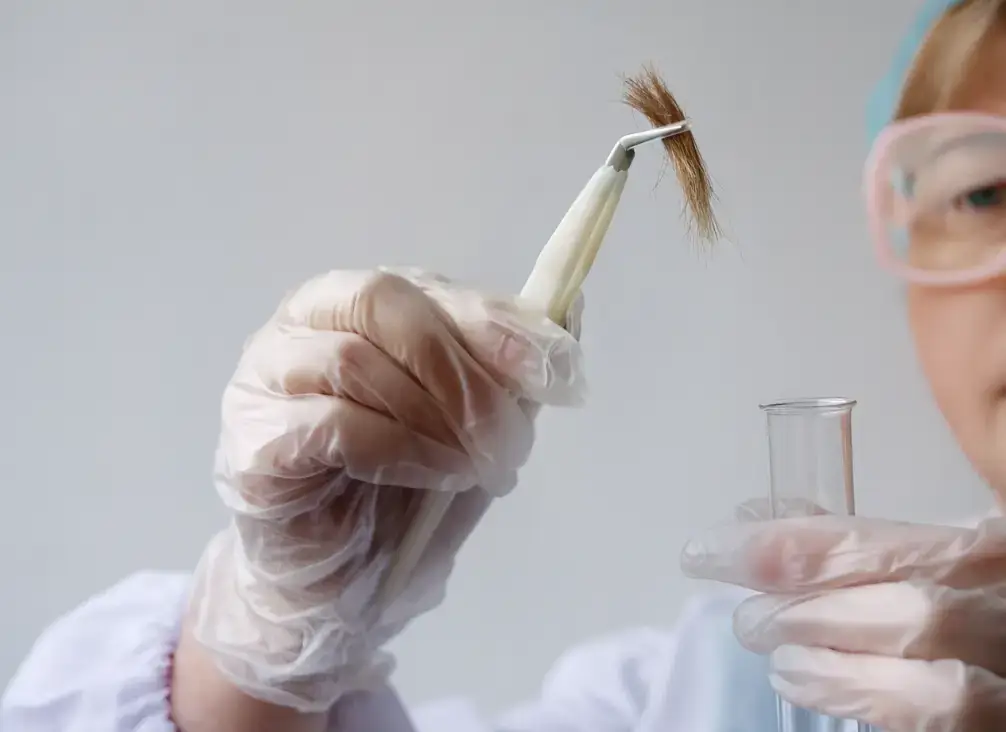
Search for it and you will find no shortage of advice: vinegar rinses, detox shampoos, bleaching, dyeing, and products that promise a clean result on a hair follicle drug test. The reason none of it works reliably is the same reason hair testing is trusted in legal settings. The record is not sitting on the outside of the hair, waiting to be washed off.
Where the drug actually sits
When a drug is taken, it travels in the bloodstream to every part of the body, including the base of the hair follicle, where new hair is being formed. As the strand grows, the drug is laid down inside the hair matrix, bound up with the proteins and pigments that make up the fibre itself.
So the evidence is structural. It is part of the strand, not a residue on it, which puts it beyond the reach of anything applied to the outside.
What treatments do and don’t change
Aggressive treatment can damage the cuticle, the hair’s protective outer layer, and that can reduce the measured concentration of a drug. It does not erase the record. In our clinical experience, heavily bleached hair still returns positive results, and the effect of dye and bleach on a result is well documented and accounted for by the laboratory.
The only certain way to remove the record is to remove the hair, and an absence of hair is itself something a court or an employer will notice. Where head hair is unavailable, body hair can usually be collected instead.
What the test can tell you
Hair grows at a reasonably predictable rate, which lets the laboratory build a timeline rather than a snapshot. A standard 3 cm sample covers roughly 90 days of history, allowing for individual variation in growth rate, and longer samples cover longer periods.
Within that window, the level of detail is enough to distinguish an occasional or social pattern of use from a chronic one. That distinction matters well beyond a pass or fail: it informs treatment programs, compliance monitoring and the weight a court gives the result.
It also cuts both ways. The same analysis that identifies use can separate genuine use from external exposure, which is what protects someone who has been in the presence of a drug but has not taken it.
Why the result holds up
A defensible result depends on more than the science. It needs a sample collected under chain of custody by an impartial collector, and analysis by a NATA-accredited laboratory working to a documented method.
Get those things right and the result stands as objective evidence of substance use over an extended period, which is precisely why the shortcuts do not work, and why the test is used where the stakes are high.