Does Dyeing or Bleaching Your Hair Change a Drug Test Result?
Dye and bleach lower the concentration measured in hair, sometimes by 70% or more. What they cannot do is turn a genuine positive into a negative.
Last updated
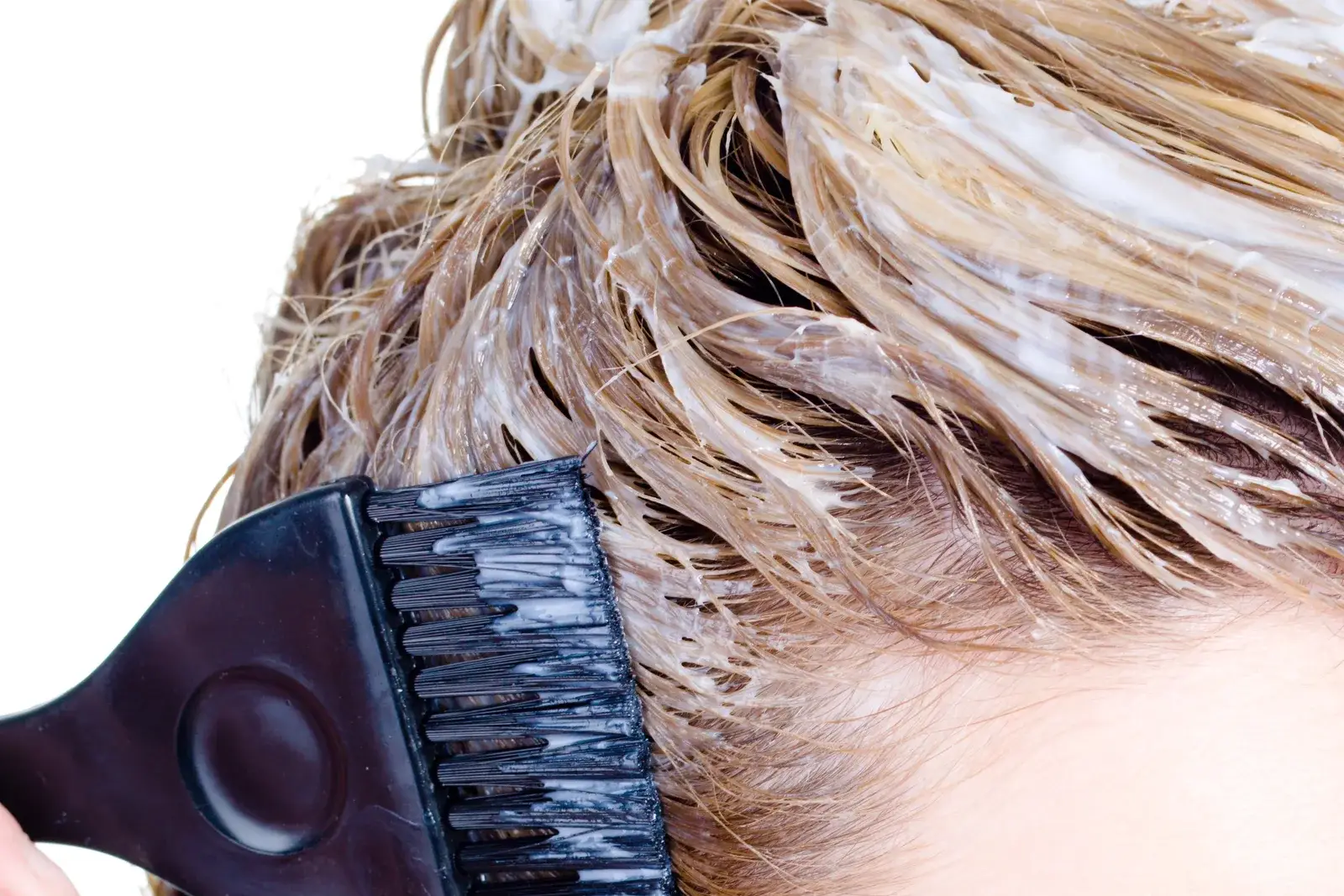
Two versions of this question arrive at our clinic. One comes from people hoping a salon appointment will fix a problem. The other, far more often, comes from people who colour their hair routinely, have a test coming up, and are worried it will be held against them.
Both deserve a straight answer, and the research gives one.
What cosmetic treatment actually does to hair
Drugs are not sitting on the surface of your hair. They are incorporated into the shaft as it forms, from the bloodstream, while that centimetre of hair is being grown. That is why washing does nothing.
Dye and bleach work differently from washing. To change colour, the product has to open up the cuticle, the overlapping outer scales of the hair, so that pigment can get in or be stripped out. That same opening lets some of what is inside come out. The harsher the treatment, the more damage, and the more is lost.
So the mechanism is real. The question is how much it matters.
What the research found: concentrations drop
The foundational study here is from 1997, in the International Journal of Legal Medicine. It compared drug content in hair before and after cosmetic treatment, and the direction was consistent, in every case the treated hair contained less.
The size of the drop varied by substance:
| Substance | Approximate reduction |
|---|---|
| Morphine | over 60% |
| Cocaine and THC metabolites | around 40–60% |
| THC, nicotine | around 30% |
Two further findings matter. Bleaching caused greater loss than dyeing. It is the more aggressive chemistry. And the extent of the loss tracked the extent of the damage: the more the hair had been degraded, the more had gone.
Those are one study’s figures, and the wider literature goes further. Dr Michael Robertson, the independent forensic toxicologist who interprets results for the clinic, puts the upper end higher: some studies have found reductions of 70% or more, and how much is lost varies with the strength of the treatment, how often it is applied and how long the hair is exposed.
Read alone, that sounds decisive. It is not, and the reason is the second study.
What the research also found: results stay positive
In 2014, a study in Drug Testing and Analysis did something the earlier work could not: it looked at what happens across a very large number of real samples rather than a controlled comparison. It examined 9,488 untreated hair samples against 1,026 dyed or bleached ones.
The concentration ranges in treated hair were indeed lower, consistent with the 1997 findings. But the rate at which samples came back positive was, in the authors’ words, not significantly different between treated and untreated hair. That held for drugs and for EtG, the alcohol marker. The conclusion was that dyed and bleached hair remains useful for detecting drug and alcohol use.
Agius R (2014), Utility of coloured hair for the detection of drugs and alcohol
Putting the two together
There is no contradiction between those studies, and holding both is the accurate position:
Cosmetic treatment lowers the number. What it cannot do is give a predictable answer.
Losing even 70% of a concentration that sits far above the reporting threshold can still leave it above the reporting threshold. That is why a real-world positivity rate barely moves while measured concentrations clearly fall, the margin between genuine use and the cutoff is often much larger than the loss a bottle of dye inflicts.
But that is a statement about ten thousand samples, not about yours. The size of the loss varies too much between one head of hair and the next to be applied as a correction to a single result.
That is why it matters most at the edges, a result close to the threshold, or a question about how much rather than whether. There, a documented history of heavy bleaching is a legitimate factor in interpretation, and one a toxicologist should account for explicitly, alongside the other things that move a concentration up or down.
Two industry sources reach the same practical conclusion:
- Lextox, Can hair dye alter a drug test?
- AMH Nationwide, Can hair dye throw off a hair follicle test?
Hair dye cannot create a positive
Worth stating plainly, because it is the version of this worry that keeps people awake: no hair product causes a false positive.
Dye, bleach, relaxers, toners and styling products do not contain drugs of abuse. There is no mechanism by which colouring your hair produces cocaine, methamphetamine or opiates in the sample. The entire scientific concern about cosmetic treatment runs one way, signal being lost, not signal being invented.
If you colour your hair regularly and you have a test coming up, you are not at risk of being wrongly accused because of it.
What about natural hair colour?
A related question, and a fair one: darker hair contains more melanin, and several basic drugs bind more readily to melanin. Whether that means dark hair reports higher concentrations than fair hair for the same use has been argued in the scientific literature for a long time, without a tidy resolution.
What it does not mean is that a result can be waved away by pointing at hair colour. It is one of the reasons results are read against established reporting thresholds, and interpreted alongside everything else known about the case, rather than treated as a straightforward measure of how much someone consumed. If it is genuinely in issue in your matter, it needs a forensic toxicologist’s written opinion, not a rule of thumb.
Why treating your hair to beat a test backfires
For completeness, since some people arrive here looking for that.
It does not reliably work, that is what the 2014 data shows. But the more practical problem is what it costs you if you try.
The laboratory records the condition of every sample it receives. Hair that has been stripped, bleached to straw or aggressively relaxed is obvious, and it is documented. In a family law or workplace matter, a heavily treated sample raises a question that is far more damaging than the original result: why was this hair treated immediately before a test?
There is also a fallback you may not want. If the hair is too degraded to analyse, the sample can be taken from elsewhere, body hair, which covers a longer and less precise window. Failing to provide a usable sample is not a neutral outcome either; in most testing regimes it is treated as a failure.
In short
- Dye and bleach do reduce the concentration measured, sometimes by 70% or more, bleaching more than dyeing, and more when the hair is more damaged.
- They do not reliably turn a genuine positive into a negative. Across more than 10,000 real samples, the positivity rate was not significantly different.
- No hair product can create a false positive.
- Routine colouring is not a problem. Declare it at collection and get on with your day.
- Treating hair to defeat a test tends to make the position worse, not better.
A court-ready hair follicle drug test here covers 95 substances at one price. See the full list, or book online.
Frequently asked questions
Does hair dye affect a drug test?
It can lower the concentration measured, because the chemistry that opens the hair shaft to let colour in also lets some drug out. What it does not reliably do is bring a genuine positive below the reporting threshold. A large real-world study found no significant difference in the rate of positive results between treated and untreated hair.
Does bleaching remove drugs from hair?
It lowers what can be measured, sometimes by 70% or more, bleaching causes more loss than dyeing, and it is the harshest common treatment. What it does not do is give a predictable result: the size of the loss varies with the strength of the treatment and how often it is applied, so it cannot be used as a way to pass. It also visibly damages the hair, and the laboratory records the condition of every sample it receives.
Can hair dye cause a false positive?
No. Hair dye does not contain drugs of abuse and cannot create a positive result. The concern with cosmetic treatment runs entirely in the other direction, losing signal, not gaining it.
Does natural hair colour affect the result?
Some basic drugs bind more readily to melanin, the pigment that makes hair dark, and this has been debated in the scientific literature for years. It is a reason results are read against established reporting thresholds and interpreted in context rather than treated as a simple measure of how much someone used. If it is raised as an issue in a legal matter, it needs a forensic toxicologist rather than a rule of thumb.
Should I dye my hair before a test?
No, and not because it will not work. Heavily treated hair invites the question of why it was treated, and that question does more damage in a hearing than the original result would have.