Can I Test Body Hair for Drugs or Alcohol, and Is It the Same as Testing Head Hair?
Body hair can be tested for drugs and alcohol when head hair is short, shaved or absent. What it shows, how far back it reads, and how it differs from head hair.
Published
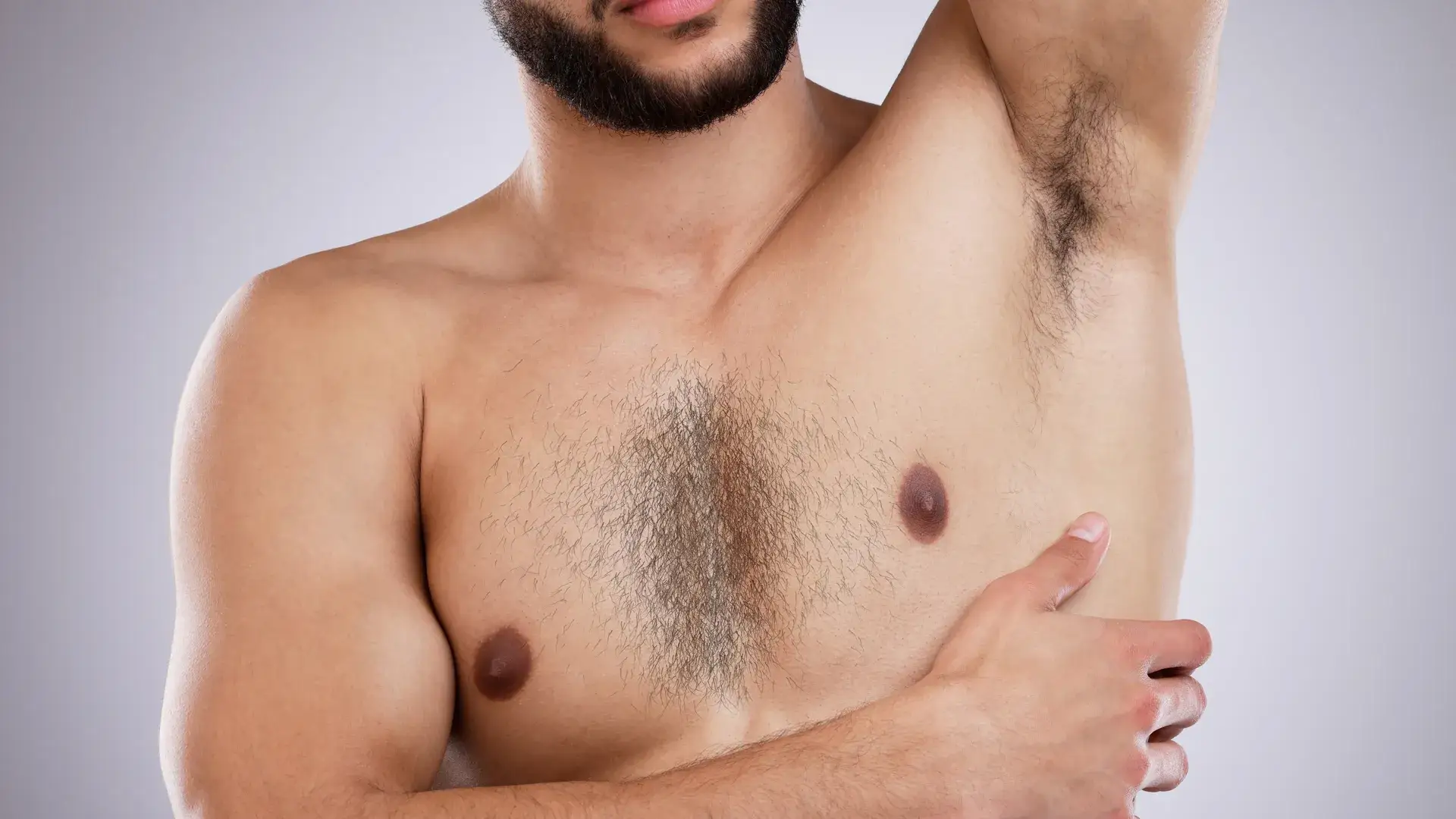
Yes. If your head hair is too short, shaved or otherwise unavailable, hair from your body can be tested for both drugs and alcohol.
The sample is analysed by the same accredited laboratory using the same laboratory testing methods. However, body hair grows and sheds differently from scalp hair, so the way the result is interpreted, particularly the estimated timeframe, is different.
Both give an approximate timeline. No one can determine exactly how fast an individual hair follicle grows, and head hair has resting (dormant) follicles too. Body hair has a significantly higher proportion of them, so its timeline covers a wider window and can be out by up to three months compared with head hair. If timelines are critical to a legal matter, it’s best to provide head hair.
Which body hair can be used?
Hair can be collected from a number of body sites, including:
- Underarm
- Beard
- Chest
- Arm
- Leg
- Pubic
Hair is cut, not pulled, and is collected as close to the skin as possible. The collection site is recorded and the hair is prepared for laboratory analysis under the appropriate collection and chain-of-custody procedures.
The amount of hair required depends on the laboratory requirements and the type of testing being performed. How we collect hair explains what happens during the collection appointment.
Head hair and body hair side by side
| Head hair | Body hair | |
|---|---|---|
| Growth | About 1 cm per month on average | Slower and varies according to body site |
| What 3 cm represents | Approximately 3 months of scalp-hair growth | Approximately 6 months as a laboratory-supported estimate |
| Timeline | Approximate | Approximate, over a wider window |
| Month-by-month segments | Available for drug testing | Possible, but the results can’t be relied upon |
| Drug testing | Yes | Yes |
| Alcohol testing | Yes | Yes |
| Legal matters | Generally preferred | Can be used when head hair is unavailable |
Why does body hair cover a longer period?
Head hair grows at approximately 1 cm per month on average. This relatively consistent growth rate allows the length of a scalp-hair sample to provide an approximate timeline.
Body hair grows differently. Growth rates vary between different parts of the body, and a greater proportion of body-hair follicles are in a resting phase at any given time.
As a result, the same length of body hair generally represents a longer period than the equivalent length of head hair.
The laboratory uses the following as an approximate timeline guide:
| Body hair length | Approximate window |
|---|---|
| 1 cm | Up to 4 months |
| 3 cm | About 6 months |
| 4 cm | About 7 months |
That’s a longer reach than head hair, and it’s why shaving your head doesn’t avoid a test. Can you cheat a hair drug test covers that in more detail.
The trade-off is precision. Body hair answers whether a substance was used over the period well. It’s less suited to when, because the window has softer edges.
Drug testing on body hair
Body hair is tested for the same drugs as head hair, using the same laboratory methods. The result reports which substances were detected and at what concentration, in picograms per milligram of hair (pg/mg).
Two things are read differently:
- The concentration. The Society of Hair Testing, which sets the international standards, advises that body hair concentrations are interpreted with caution, because body hair grows in different cycles from head hair. What results mean explains how levels are read.
- Segments. Head hair can be cut into 1 cm sections and reported month by month. The laboratory can segment body hair too, but body hair doesn’t grow continuously, so a centimetre can’t be matched to a particular month and the results can’t be relied upon. That’s why we recommend head hair wherever a month-by-month picture matters. Segmental hair testing explains how that works on head hair.
Alcohol testing on body hair
A hair alcohol test measures ethyl glucuronide (EtG), a marker the body makes only after drinking alcohol. Results are read against the Society of Hair Testing’s two international cut-offs: 5 pg/mg for abstinence and 30 pg/mg for chronic excessive drinking. Hair alcohol test results sets out all three bands.
Hair from any body site can be tested for alcohol, and the laboratory reports results for all of them.
Pubic hair is the most sensitive sample for showing abstinence. The international standard describes a negative EtG result in pubic hair as the most sensitive test of abstinence, because a single drinking occasion may give a positive result. If you’re showing that you’ve stopped drinking, a negative result from that sample carries that weight.
Is a body hair result as strong as a head hair result?
It’s the same test, by the same laboratory, under the same chain of custody. An AHPRA-registered practitioner checks your photo ID before collecting, and the sample is sealed under chain-of-custody protocol.
Head hair is still preferred for legal matters, because its timeline is clearer and its segments can be relied upon. Body hair is the accepted alternative when head hair isn’t available.
If your case turns on specific dates, talk to your solicitor about which sample suits it before collection. A body hair result covers a wider window, and that can matter when the question is whether use stopped before a particular date.
Book a body hair test
Collections are by appointment at our Melbourne clinic, and kits are posted Australia-wide to a GP you nominate. Fees are on the fees page.
If you need a body hair result explained for a family law, workplace or criminal matter, independent forensic toxicologist Dr Michael Robertson provides opinions on hair, blood, urine, saliva or breath results, whoever did the testing. See the expert medico-legal service.
Book a test online, or call (03) 9380 5434 to book by phone. Calls are answered by our reception staff, who look after bookings and can’t give legal advice. Our frequently asked questions answer the questions people ask most.
Frequently asked questions
Which body hair can be used for a hair test?
Underarm, beard, chest, arm, leg or pubic hair. The amount needed depends on the laboratory requirements and the type of testing.
How far back does a body hair test go?
Further than the same length of head hair. Take the length of the sample and add about three months: 1 cm of body hair can represent up to four months, and 3 cm about six months. Both head and body hair give approximate timelines, and body hair's covers a wider window.
Can body hair be split into monthly segments?
The laboratory can segment body hair, but the results can't be relied upon. Body hair doesn't grow continuously, so a centimetre of it can't be matched to a particular month. If you need a month-by-month picture, we recommend head hair. Segmental testing explains how it works.
Can pubic hair be used for an alcohol test?
Yes. The international standard describes a negative alcohol result in pubic hair as the most sensitive test of abstinence, because a single drinking occasion may show.
Will a court accept a body hair result?
Body hair results are tested by the same accredited laboratory under the same chain of custody as head hair. Head hair is preferred for legal matters because its timeline is clearer, so if your case turns on specific dates, talk to your solicitor about the sample site before collection.
Sources
- Society of Hair Testing, 2022 Consensus on General Recommendations for Hair Testing
- Society of Hair Testing, Consensus on Alcohol Markers, Revision 2019
- Society of Hair Testing, Consensus on Drugs of Abuse (DoA) Testing in Hair, 2021